
SU Hope
Principal Investigator
Professor Raha Akhavan
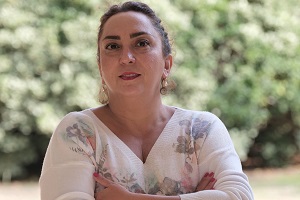 Raha Akhavan-Tabatabaei is professor of Operations Management & Business Analytics at Sabanci Business School. She obtained her PhD degree from Edward P. Fitts Department of Industrial and Systems Engineering at North Carolina State University. Her research interest is modeling and analysis of systems and operations under uncertainty, with applications in disaster management, healthcare, production, and logistics. She is the founder and director of SU-HOpe Research Lab (Sustainable Heath and Humanitarian Operations) at Sabanci Business School. Her work is published in high ranking journals such as Information Systems Research, European Journal of Operational Research, Reliability Engineering and System Safety, Annals of OR, Transportation Science, Transportation Research Part C, Decision Analysis and Medical Decision Making. Her paper on "Curbing the Opioid Crisis: Optimal Dynamic Policies for Preventive and Mitigating Interventions” has received the Clemen–Kleinmuntz Decision Analysis Best Paper Award in 2024. She serves on the editorial board of Journal of Business Analytics and as ad-hoc reviewer for several prominent journals in the field, including EJOR, JORS, Reliability Engineering and System Safety, IEEE Transactions on Engineering Management and IISE.
Assistant Professor Altuğ Tanaltay
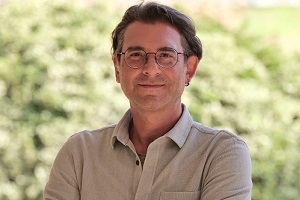 Altug Tanaltay, born in 1980 in Istanbul, completed his undergraduate studies in Political Science and Public Administration at Middle East Technical University in 2003, followed by Master of Science degrees in 2007 in Management of Marketing and Logistics from Galatasaray University, and in Information Technologies from Sabanci University. After his professional employments, in 2008, he began working as an Instructor at Sabanci University, Faculty of Engineering and Natural Sciences, Computr Science and Engineering Program where he trained numerous undergraduate, graduate students, and professionals on Software Engineering and Information Systems, along with providing consultation for complex software systems and projects. Earning his PhD from Sabanci Business School in 2023, his research, leveraging methodologies from Machine Learning, Natural Language Processing (NLP), and Computational Statistics, has been primarily focused on extracting and analyzing insights from high-volume online communications, digital branding communicationi and disaster management in digital contexts. He seeks to advance both the academic and practical applications of AI and data science in business and social contexts while continuing his research and teaching as a faculty member at Sabancı Business School.
Current Students
Can Erzi
Email Adress: can.erzi@sabanciuniv.edu |
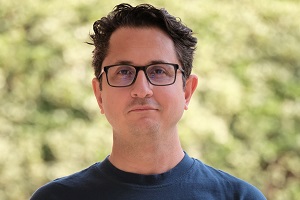 After graduating from Business Administration from Marmara University and completing my master’s in management at Boğaziçi University, I have worked over 18 years as an internal auditor, risk manager, compliance executive and procurement lead in several industries including consulting, FMCG, manufacturing and education. I am currently working on my dissertation, which is focusing on the supply side of Humanitarian Supply Chains. Using empirical methods, I study both individual and corporate donation patterns in order to understand how they contribute to the Material Convergence phenomenon, which is the discrepancy of supply and demand in humanitarian supply chains.
Mahour Abbaspour
Mahour Abbaspour Khiabani is a PhD student in Management (Business Analytics and Operations Management) at Sabancı Business School, focusing on healthcare operations. Her research applies stochastic modeling, optimization, and decision analytics to design equitable and efficient healthcare systems. Building on her background in mechanical engineering and industry experience in international project and sales management, Mahour integrates analytical rigor with practical insight to address complex, data-driven problems. Her current work develops dynamic decision models for diagnostic resource allocation in breast cancer care, aiming to bridge the gap between policy design and real-world practice to improve access, equity, and outcomes in health systems. Email Adress: m.abbaspourkhiabani@sabanciuniv.edu |
Parinaz Kiavash
Email Adress: parinaz.kiavash@sabanciuniv.edu |
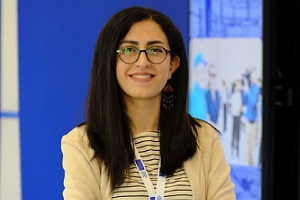
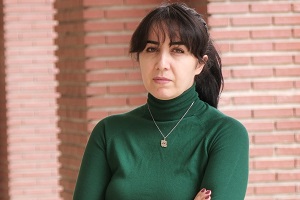 Parinaz Kiavash is a Ph.D. student in Business Analytics and Operations Management at Sabancı Business School. She holds a Bachelor’s degree in Industrial Engineering and a Master’s degree in Executive Management. Her research lies at the intersection of humanitarian crisis management, humanitarian supply chain optimization, and data analytics. She is especially interested in how social media data can be leveraged to detect, understand, and anticipate emerging needs during disasters, as well as to better understand disaster response and public communication in times of crisis. Her work combines methods from machine learning, text analysis, and social media analytics to generate insights that support more responsive, efficient, and evidence-based humanitarian operations. More broadly, her research reflects a strong commitment to applying analytics and data-driven approaches to complex societal challenges.
Ali Navaei
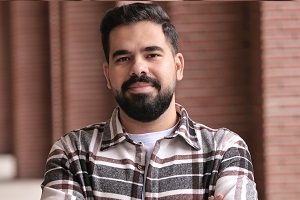
Ali Navaei is a PhD student in Business Analytics and Operations Management at Sabancı Business School. He holds a bachelor's degree in Industrial Engineering from K. N. Toosi University of Technology and a master's degree in Industrial Engineering from the University of Tehran. His research background lies in humanitarian operations and healthcare supply chains, with a focus on mathematical modeling and data-driven optimization. He is currently aiming to deepen his expertise in these domains by integrating emerging analytical approaches to develop innovative and impactful insights within this context. Email Adress: ali.navaei@sabanciuniv.edu |
Nilüfer Sayın
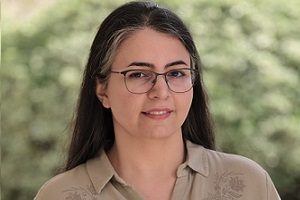 Nilüfer Sayın is a PhD student in Management (Business Analytics and Operations Management) at Sabancı Business School. She holds a bachelor’s degree in Mechanical Engineering from the University of Tehran and an MBA from Sharif University of Technology, where her master’s thesis focused on stock market data analysis. Her research interests focus on the practical applications of data science and artificial intelligence to address challenges faced by businesses and society, with a particular emphasis on sustainability. Through her research, she aims to generate data-driven insights that contribute to more effective and socially responsible organizational practices, particularly in disaster-related contexts. Email Adress: nilufer.sayin@sabanciuniv.edu |
Ekin Toprak
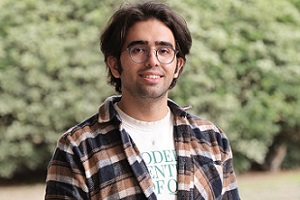
I am a senior Industrial Engineering student at Sabancı University and currently work as a researcher at the SU-HOpe (Sustainable Health and Humanitarian Operations) Research Lab. My research focuses on disaster relief logistics and humanitarian supply chain optimization. Through the PURE Undergraduate Research Project, I contribute to improving coordination and decision-making among NGOs by applying systems thinking and process mapping approaches. In parallel with my research experience, I have gained practical exposure to risk management, internal audit, and data analytics through my internships, where I worked on KPI reporting, dashboard development, and financial risk analysis. Email Adress: ekin.toprak@sabanciuniv.edu |
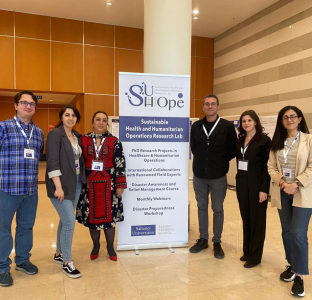
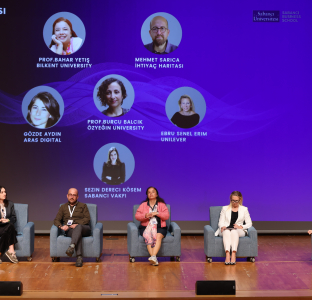
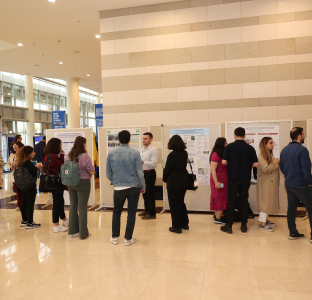
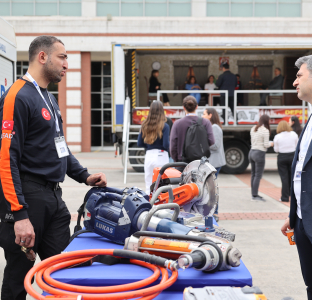
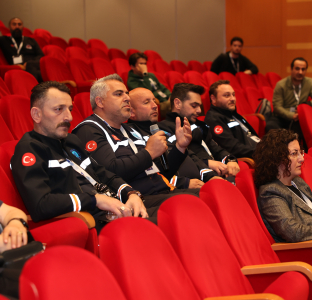
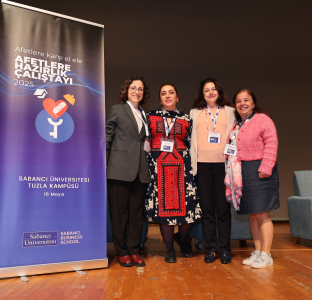
The first Disaster Preparedness Workshop at Sabancı University brings together academic researchers and field practitioners to address critical challenges in disaster management. Scheduled for 16 May at the Tuzla Campus, this event is designed as a collaborative platform to bridge the gap between theory and practice in the preparedness and response phases of disasters.
Our mission is to foster open dialogue, share practical experiences, and collectively develop actionable solutions that can enhance disaster resilience. In light of the devastating Kahramanmaraş earthquake in 2023, the workshop particularly encourages participants to reflect on real-world relief efforts, logistics challenges, and coordination strategies.
By creating a space where success stories and operational difficulties can be shared candidly, we aim to strengthen collaboration between academia and practitioners. Together, we strive to build more adaptive, responsive, and effective disaster preparedness systems for the future.
click here Syllabus
This Webinar Series is an academic platform designed to bring together scholars, researchers, and practitioners working at the intersection of sustainable health and humanitarian operations. Through these webinars, we aim to foster dialogue on pressing societal challenges by highlighting research that advances equitable, resilient, and data-informed solutions in areas such as healthcare systems, disaster response, humanitarian logistics, and public policy. The series also serves as a space for interdisciplinary exchange, collaboration, and the dissemination of innovative ideas that can contribute to more effective and socially impactful operations.
https://www.linkedin.com/groups/10025556/





email: suhope.sbs@sabanciuniv.edu