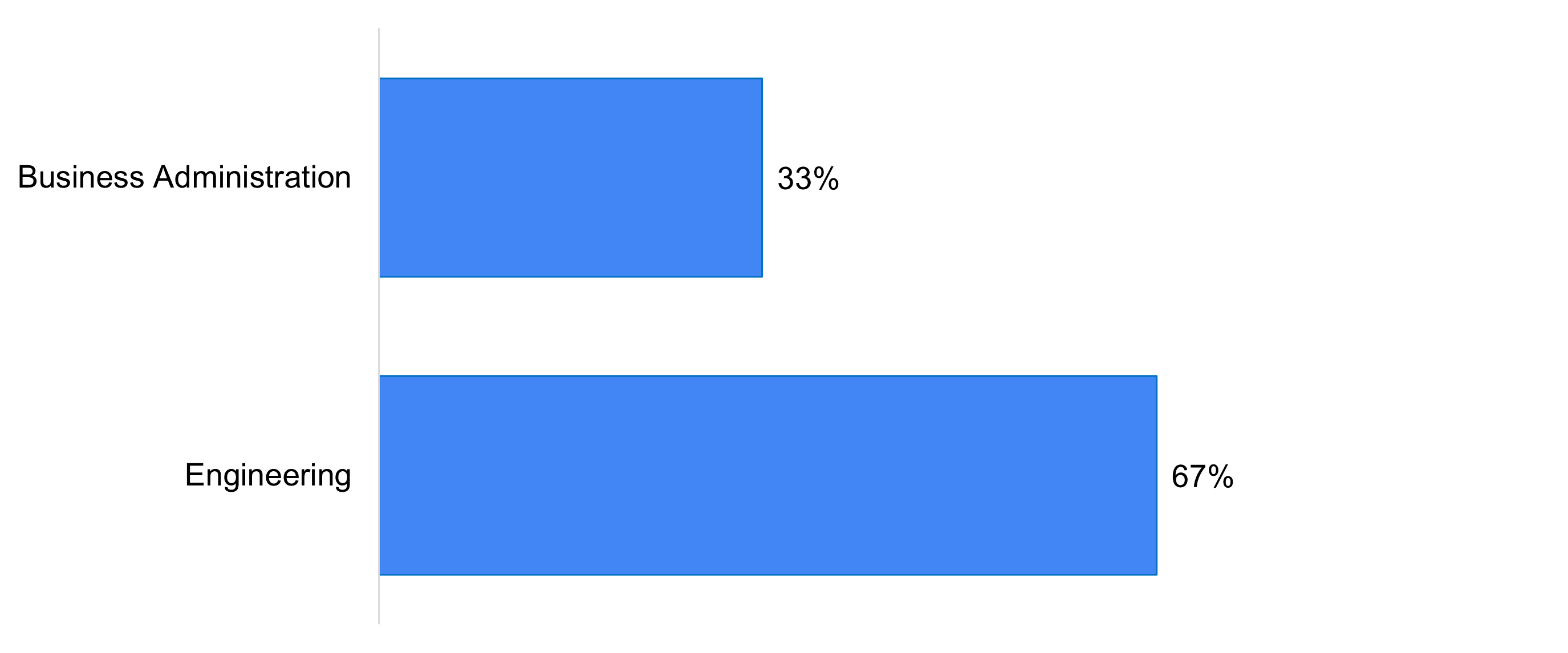
Students coming from diverse industries, combine their professional experience with business analytics competencies to develop Graduation Projects addressing real-world business problems. A sample of recent projects is given below:
1. Talent Intelligence and Predictive Retention Analytics Platform
An integrated HR Analytics Platform is developed consisting of HR dashboards and individual Talent Cards. The dashboards provide an overall view of workforce indicators, while the Talent Card brings together different types of information about each employee. A predictive retention model is developed to complement the employee profile with an employee-level turnover-risk indicator. The model results were exported to Excel and added to the Power BI data model through employee ID so that they could be displayed on the Talent Card.
Techniques used: Principal Component Analysis, Random Forest, XGBoost, Logistic Regression, Calibrated SVM, Deep Learning
Software/tools used: Power BI, Python using Google Colab
2. Export Market Attractiveness & Profitability Engine
This project develops a structured, transparent and reproducible decision-support model for prioritizing export destination markets for cement and clinker. The model supports export allocation decisions — which countries to focus sales, capacity and credit on — through a hybrid Multi-Criteria Decision-Making (MCDM) approach in which criterion weights are derived via the Analytic Hierarchy Process (AHP) to determine a strategic attractiveness score. This score is then coupled with an Export Profitability layer that computes a realistic net margin per ton for each destination under the company's actual FOB/CFR sales terms and tests the resulting price against destination-market delivered price levels. The same framework is relevant not only for exporters selecting sales destinations but also for companies evaluating an investment, such as a terminal, in a target market.
Techniques used: MCDM, AHP, Delphi method
Software/tools used: Excel, Python, Power BI
3. LLM-Augmented Feature Engineering for Used-Vehicle Price Prediction
This report investigates whether interpretable features extracted from free-text vehicle listing descriptions by a locally served, open-weight large language model improve used-vehicle price prediction beyond structured attributes alone. A 12-field extraction schema — covering condition, accident history, maintenance, ownership, title status and urgency to sell — is applied using Qwen 2.5 7B Instruct, served locally via LM Studio with schema-constrained JSON prompting, at zero API cost and with no listing data leaving the machine. A LightGBM model combining these LLM extracted features with structured attributes is compared against a structured-only baseline retrained on the identical sample and split.
Techniques used: Feature extraction from text by LLM, gradient-boosted regression tree (LightGBM)
Software/tools used: Python, Qwen 2.5 7B Instruct, LM Studio
4. Strategic Product Mix Optimization in Glass Fiber Production
A large glass fiber producer has 200+ glass fiber SKUs across four product families — Single-End Roving, Multi-End Roving, Chopped Strands, and Mats. Production planning has always been intuition-based, and that creates friction between production and sales. In this project, a decision support system is developed, which replaces the guesswork with an optimization engine. At its core is a two-phase Excel model — a focused “Category A” version (Phase 1) and a full-catalog version (Phase 2) — that works out the profit-maximizing monthly production quantity for every SKU, given machine-group capacity, demand limits, and contractual minimum commitments.
Techniques used: Linear Programming, integer linear programming
Software/tools used: Excel Solver, Python with SciPy's HiGHS solver.
5. Customer Lifetime Value-Weighted Churn Prediction and Causal Campaign Optimization in E-Commerce: An Uplift Modelling Approach
This project develops and evaluates an end-to-end framework for prioritizing customer relationship management (CRM) interventions in e-commerce by combining three layers of quantitative reasoning: (i) probabilistic Customer Lifetime Value (CLV) estimation, (ii) machine-learning-based churn prediction with model interpretability, and (iii) quasi-experimental estimation of the causal effect of promotional engagement on subsequent retention. The pipeline delivers a single, transparent scoring rule per customer: predicted churn probability × predicted CLV × conditional average treatment effect (CATE).
Techniques used: Customer segmentation (RFM), Customer Lifetime Value estimation by BG/NBD (Beta-Geometric/Negative Binomial Distribution) and Gamma-Gamma models, Churn prediction by XGBoost and SHAP.
Software/tools used: Python using Google Colab
6. Behavioral Lead Segmentation and Conversational Analytics for Lead Conversion in Medical Tourism
This project asks two questions. Whether the content of the pre-offer WhatsApp conversations of patient enquiries adds predictive information beyond the structured CRM fields already available, and whether a prediction built on it can be turned into an action that a consultant can take without interpreting a probability. Three models were compared: a logistic regression on structured fields, a neural network on the same fields, and a hybrid neural network adding the conversation text. A rule layer maps the behavioral segment and the score band onto one of eighteen actions, each with a reason, a contact level, a warning about what to avoid and a follow up interval.
Techniques used: behavioral segmentation (k-means, hierarchical, rule-based) language embedding (e.g. TF-IDF with SVD), logistic regression, multilayer perceptron, PCA, Association rule mining with Apriori, LDA topic modeling
Software/tools used: Python, Flask
7. A Tender Strategy Recommendation Tool
This project designs and develops a decision-support tool that recommends a suitable e-auction strategy for a given procurement case. The main objective of the project is to transform expert tender know-how into a transparent, rule-based decision engine that scores the alternative e-auction mechanisms for a given case and recommends the most suitable one with explicit reasons. The recommendation engine also proposes an information-disclosure plan — what to show the bidders, and when — together with practical parameter guidance covering, depending on the mechanism, the opening-price logic, bid steps, timing, winner declaration and selective post-auction bargaining, or — for the elimination / shortlist design — the shortlist rules and their communication. Several machine learning classifiers are also trained to predict the engine's recommendation from the scenario features.
Techniques used: Multi-criteria Decision Making, Rank Order Centroid method, machine learning (logistic regression, k-nearest neighbors, decision tree, gradient boosting, random forest)
Software/tools used: Python using Jupyter/Google Colab, Javascript
8. Forecasting the Market Clearing Price (PTF) in the Turkish Electricity Market with Machine Learning Methods
This project addresses three main questions: (1) which machine learning method provides the most reliable day-ahead PTF forecast under a realistic information set; (2) whether incorporating wind generation forecast data (RİTM) improves predictive performance; and (3) whether a production-feasible forecasting framework can be built using only information that is genuinely available at the actual decision point, without relying on data that would not yet be published in a live setting.
Techniques used: Linear regression, random forest, gradient boosting, ANN (MLPRegressor)
Software/tools used: Python
9. Where Does Mobile Dimensioning Belong? A Multi-Node Deployment Decision Framework for Air Cargo Terminals
In air cargo, the invoice is calculated based on the greater of the shipment's physical weight and its volumetric weight. At the studied facility, dimension data is collected at three operationally distinct points. The main research question is at which of the three measurement points in the studies air cargo facility does a LiDAR-based handheld dimension measuring device generates economic value robust to uncertainty analysis compared to the current manual process, and at which points is maintaining the manual process or evaluating a fixed installation a decision with stronger grounds. Criteria such as throughput, time pressure, cost of error and cargo geometry are considered.
Techniques used: The Wilcoxon signed-rank test was used for paired comparisons
10. Targeting the Right Customer at the Right Time: A Predictive Framework for Campaign Personalization
This project builds a data driven framework that addresses challenges in marketing campaigns: customer segmentation to answer the "who," and predictive modeling to answer the "when" and "how likely." The practical objective is straightforward: a company loads its customer transaction data into the pipeline and receives a scored, ranked customer list. For each customer, the framework produces a purchase likelihood score, a discount responsiveness score, a reactivation probability, a campaign response probability, a timing readiness score, and a composite priority rank. From this output, the marketing team knows exactly which customers to target for each campaign type.
Techniques used: feature engineering, customer segmentation (k-means), Kaplan-Meier survival analysis, LightGBM classification model, SHAP explainability
Software/tools used: Python using Google Colab
11. Real Time Anomaly Detection in Invoice Approval Processes: A Two-Layer Rule-Based and Statistical Framework for Prioritizing Manual Review
In the operation examined in this project, a central control unit reviews approximately 450,000 invoices per year across 270 international locations which makes reviewing every record with equal attention impractical and leaves sampling risk in whatever is not reviewed. This project proposes a two-layer anomaly detection framework that prioritizes manual review rather than replacing it. The framework combines a statistical layer and a rule-based layer in three independent methods: amount deviation, payment channel dominance, and reference repetition. Instead of a numerical risk score, the framework produces explainable findings that state which control was triggered and why.
Techniques used: Tukey's IQR fences and the modified Z-score
Software/tools used: Python using Google Colab